
This chicken stock recipe is an easy way to add rich, homemade flavor to soups, rice, sauces, and stews. Made with chicken bones, fresh vegetables, herbs, and water, it creates a versatile cooking base for everyday meals. Made with chicken bones, fresh vegetables, herbs, and water, it creates a versatile base for soups, sauces, rice, and stews.
Additionally, preparing stock at home allows you to control the ingredients and adjust the seasoning to your preferences.
With a little preparation and gentle simmering, you can make a flavorful batch to use throughout the week or freeze for later.
What Is a Chicken Stock Recipe?
Homemade chicken stock is made by simmering chicken bones with fresh vegetables, herbs, and water to bring out a rich, savory flavor that adds depth to many dishes. During simmering, the ingredients gradually release their flavors, producing a savory base for many homemade dishes.
Although chicken stock and chicken broth are often used interchangeably, they can differ in preparation. Stock typically emphasizes bones and connective tissue, while broth often includes meat and may be seasoned more heavily. However, recipes vary, and the two products can overlap.
Making chicken stock at home lets you choose the ingredients and adjust the flavor to suit your taste.For instance, you can leave out added salt, adjust the herbs, or use roasted chicken bones for a deeper, more savory taste.
Why Make Homemade Chicken Stock?
There are several reasons to prepare chicken stock in your own kitchen.
- Simple ingredients: Chicken bones, vegetables, water, and herbs create a flavorful foundation.
- Customizable seasoning: Choose the herbs and amount of salt that suit your cooking needs.
- Versatile cooking ingredient: Use it in soups, gravies, sauces, rice dishes, and stews.
- Meal preparation: Make a batch in advance to simplify cooking during busy weekdays.
- Reduced food waste: Suitable leftover chicken carcasses can be used to prepare another useful ingredient.
- Convenient storage: Refrigerate a small batch for short-term use or freeze portions for later.
Most importantly, homemade stock helps you build flavor in everyday meals using basic ingredients.
Chicken Stock Recipe Ingredients
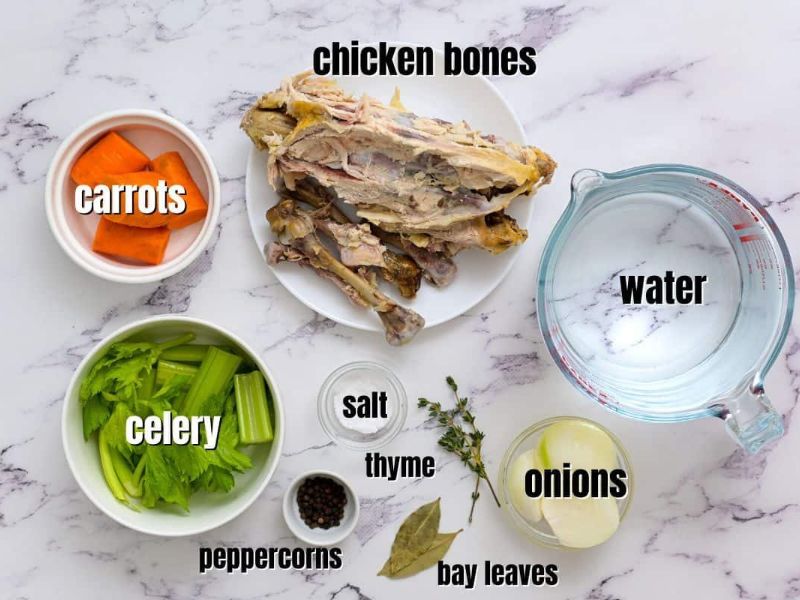
These simple ingredients come together to make a delicious chicken stock that works well in a variety of recipes. For a richer taste, grab a large pot and start with fresh ingredients.
| Ingredient | Quantity | Purpose |
| Chicken bones or carcass | 2–3 pounds | Creates the main chicken flavor |
| Cold water | 10–12 cups | Forms the liquid base |
| Yellow onion | 1 medium | Adds savory sweetness |
| Carrots | 2 medium | Contribute mild sweetness |
| Celery stalks | 2 | Add aromatic flavor |
| Garlic cloves | 3 | Provide depth |
| Bay leaves | 2 | Add herbal notes |
| Whole black peppercorns | 1 teaspoon | Provide gentle warmth |
| Fresh parsley | 3–4 sprigs | Adds a fresh herbal aroma |
| Fresh thyme | 3–4 sprigs | Enhances the flavor |
| Salt | Optional | Allows seasoning to be adjusted later |
How to Choose Chicken Bones
Chicken backs, necks, wings, and leftover roasted chicken carcasses are all great choices for homemade stock. Additionally, combining different types of bones can give your stock a richer, fuller flavor.
Roasted bones generally contribute a deeper, more savory taste. Nevertheless, raw chicken bones work well when cooked properly.
Always use fresh or safely stored chicken. Avoid bones that have been left at unsafe temperatures or show signs of spoilage.
Preparing the Vegetables and Herbs
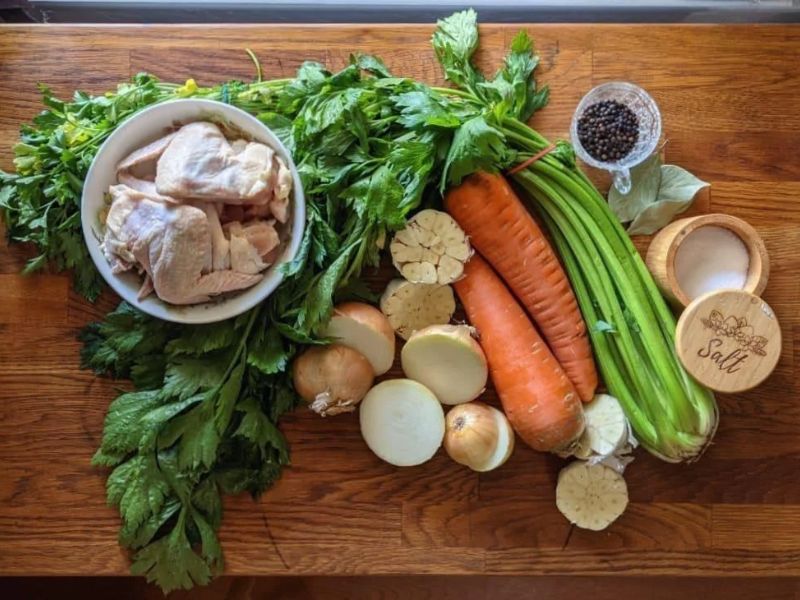
Roughly chop the onion, carrots, and celery. Since these ingredients will be strained out later, there is no need to cut them into perfectly even pieces.
Gently crush the garlic cloves to bring out their natural aroma and flavor. Meanwhile, rinse the fresh herbs and measure the remaining seasonings.
How to Make a Chicken Stock Recipe Step by Step
Follow these instructions to prepare homemade chicken stock on the stovetop.
Step 1: Place the Chicken Bones in a Stockpot
First, place the chicken bones or leftover carcass in a large pot to begin preparing your homemade chicken stock.. If necessary, break a large carcass into smaller pieces so it fits comfortably.
Add 10–12 cups of cold water to the pot, making sure the chicken bones are mostly submerged. Leave sufficient room at the top of the pot to prevent spills as the liquid heats.
Step 2: Add the Vegetables and Herbs
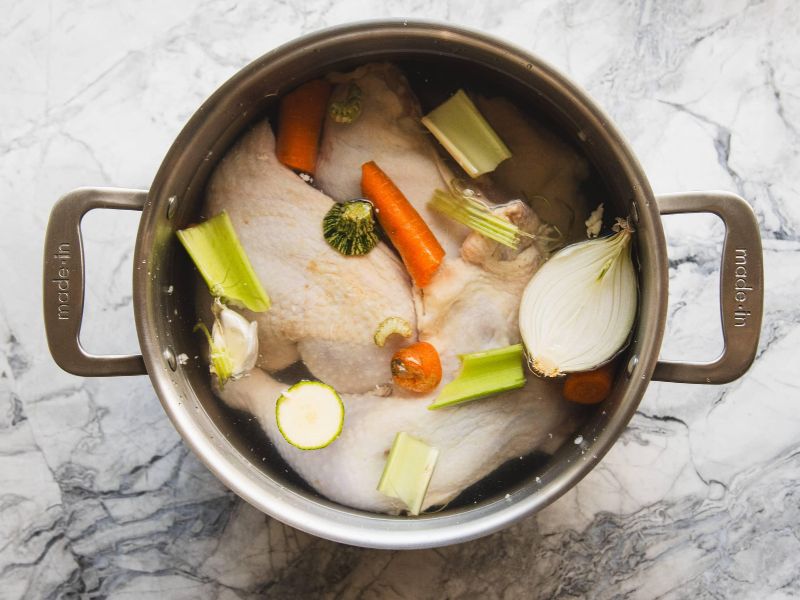
Toss the onion, carrots, celery, and garlic into the pot with the chicken bones. Next, include the bay leaves, black peppercorns, parsley, and thyme.
For a more versatile stock, leave out the salt at this stage. This allows you to season individual dishes later without making the stock excessively salty.
Step 3: Bring the Liquid to a Gentle Simmer
Heat the pot over medium-high heat until the water is almost boiling. Then, turn the heat down to low and let the stock simmer gently.
Avoid a vigorous boil because excessive bubbling can break up the ingredients and make the finished stock cloudy.
During the early stages of cooking, some foam may rise to the surface. Skim it off with a spoon if you prefer a cleaner-looking liquid.
Step 4: Simmer the Chicken Stock
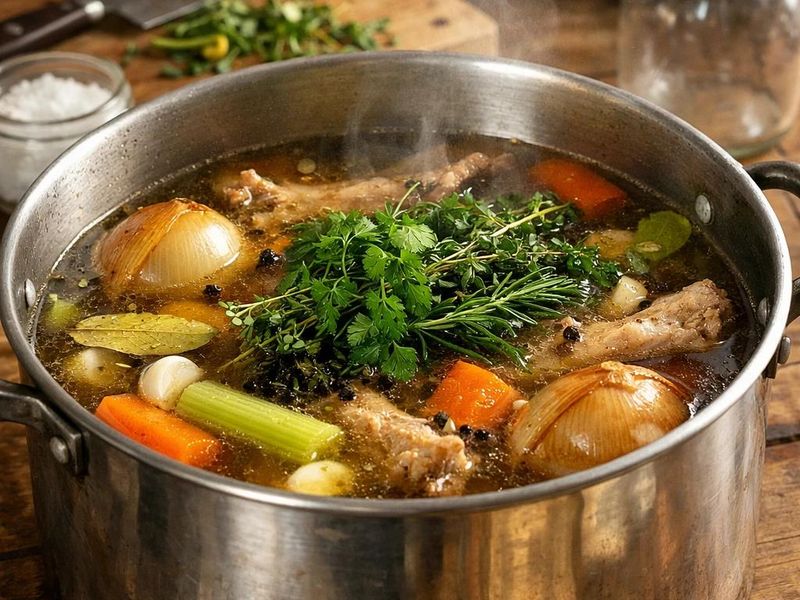
Keep the stock cooking on low heat for 3–4 hours so the chicken bones and vegetables have plenty of time to build a deep, rich flavor.Partially cover the pot and check it periodically to make sure the liquid is not evaporating too quickly.
If the bones start poking above the liquid, pour in a little hot water to keep them mostly covered.Additionally, avoid frequent stirring so the ingredients remain relatively intact.
As the stock cooks, its flavor will gradually develop. Carefully taste a little of the stock. If you prefer a deeper flavor, let it simmer a bit longer.
Step 5: Strain the Stock
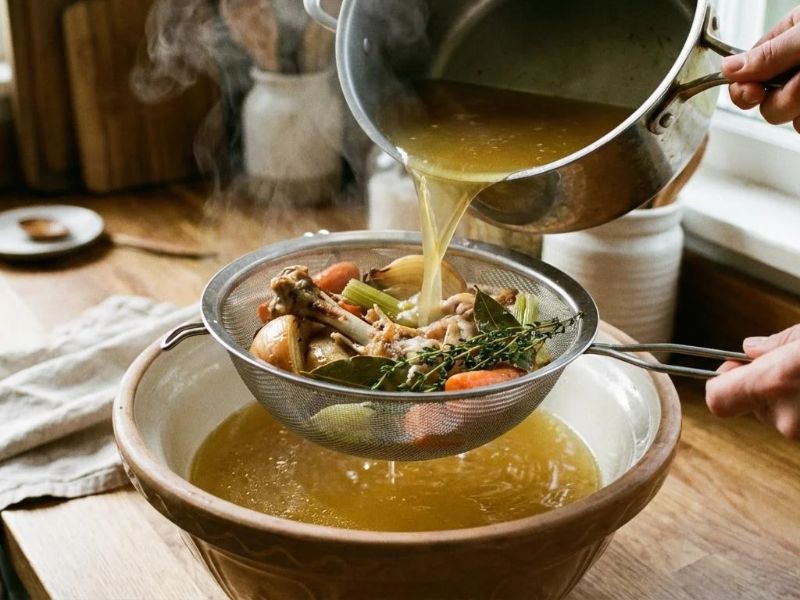
Turn off the heat and allow the liquid to settle briefly.Pour the stock through a fine-mesh strainer into a large, heat-safe container to remove the bones and vegetables.
Discard the bones, vegetables, and herbs after straining. The bones and vegetables have already released most of their flavor into the stock.
For a clearer result, do not press the solids firmly against the strainer. If needed, strain the liquid a second time.
Step 6: Cool and Store Properly
Divide the hot stock into smaller, shallow containers to help it cool quickly. Refrigerate it promptly rather than leaving the entire pot on the counter for an extended period.
Refrigerate within two hours of cooking, or within one hour when the surrounding temperature exceeds 90°F (32°C). Keep the refrigerator at 40°F (4°C) or below.
After the stock has cooled in the refrigerator, you may see a layer of fat on top. Simply skim it off with a spoon if you prefer a lighter stock. Your homemade chicken stock is ready to use in your favorite recipes or store in the freezer for later.
Chicken Stock Recipe Preparation and Cooking Time
Use this table to plan your cooking schedule before getting started.
| Recipe detail | Information |
| Preparation time | 15 minutes |
| Cooking time | 3–4 hours |
| Total time | Approximately 3 hours 15 minutes to 4 hours 15 minutes |
| Yield | Approximately 8–10 cups |
| Serving size | 1 cup |
| Course | Cooking staple |
| Method | Stovetop |
| Main ingredients | Chicken bones, vegetables, herbs, and water |
The final yield may vary depending on the size of your pot, the heat level, and the amount of evaporation during simmering.
Tips for the Best Chicken Stock Recipe
A few simple techniques can help you achieve a more flavorful and consistent result.
Start With Cold Water
Cold water is a traditional starting point for stock because it allows the ingredients to heat gradually. This method works well for extracting flavor from chicken bones.
Maintain a Gentle Simmer
Keep the heat low once the liquid begins simmering. Gentle cooking helps limit evaporation and prevents excessive agitation of the ingredients.
Avoid Adding Too Much Salt
Stock is usually an ingredient in another recipe rather than a finished dish. Therefore, leaving out salt or using only a small amount makes it easier to control the seasoning of your final meal.
Roast the Bones for a Deeper Flavor
For a richer, roasted taste, place raw chicken bones on a baking tray and roast them in an oven preheated to 400°F (200°C) until browned and cooked through. The time will depend on the size of the pieces.
Transfer the roasted bones and any suitable browned drippings into the stockpot. Then, add the water, vegetables, and herbs as usual.
Use Herbs in Moderation
Parsley and thyme complement chicken without overpowering it. You can also experiment with other herbs, but add strongly flavored varieties sparingly to maintain a balanced result.
Common Mistakes to Avoid
Even a simple chicken stock recipe can be affected by a few common mistakes.
- Boiling too vigorously: This can make the stock cloudy and break up the ingredients.
- Adding too much water: Excess water can weaken the flavor.
- Overseasoning: Too much salt may become more noticeable if the stock is reduced.
- Skipping the straining step: Small bone fragments and vegetable pieces may remain in the liquid.
- Cooling stock too slowly: A large pot can take too long to cool safely.
- Leaving stock at room temperature overnight: Stock left out too long should be discarded rather than saved.
By following the cooking and storage instructions carefully, you can improve both the quality and safety of your homemade stock.
How to Store Homemade Chicken Stock

Proper storage helps preserve the flavor and quality of your stock.
Refrigerator Storage
Place the stock in clean, covered containers and refrigerate it promptly. Use refrigerated homemade chicken stock within 3–4 days, following standard food-safety guidance for cooked leftovers.
For convenience, store the stock in smaller portions so you only need to open the amount required for a recipe.
Freezer Storage
For longer storage, freeze the stock in airtight, freezer-safe containers. Leave a little space at the top because liquids expand when frozen.
Label each container with the preparation date. Additionally, for the best quality and flavor, try to use your frozen chicken stock within 2–3 months.. Stock kept continuously frozen at 0°F (-18°C) or below may remain safe longer, although its quality can gradually decline.
Reheating Chicken Stock
Thaw frozen stock in the refrigerator or use an appropriate cold-water or microwave method. You can also add frozen stock directly to a pot if your recipe allows.
When reheating stock for immediate consumption, bring it to 165°F (74°C).
Ways to Use Chicken Stock in Everyday Cooking

Homemade chicken stock can improve the flavor of many everyday dishes. In addition, preparing it in advance makes it easier to build flavorful meals without starting from scratch.
Chicken Soup and Noodle Soup
Use chicken stock as the base for chicken noodle soup, vegetable soup, or other comforting recipes. Add cooked chicken, vegetables, noodles, and seasonings according to your preferred recipe.
Rice and Grain Dishes
Replace some or all of the cooking water with chicken stock when preparing rice. The liquid adds a savory flavor that pairs well with vegetables, chicken, and herbs.
For a balanced result, taste the rice as it cooks and adjust the seasoning only when necessary.
Gravy and Pan Sauces
Combine chicken stock with a suitable thickener to prepare homemade gravy. Additionally, you can use a small amount to loosen browned ingredients from a cooking pan and create a flavorful sauce. Moreover, if you are planning a hearty meal, check out our healthy beef dinner recipes for more delicious dinner ideas.
Pasta and Stews
Add chicken stock to pasta sauces, casseroles, and stews when you need extra flavor and moisture. However, adjust the liquid according to the recipe so the final dish does not become too thin.For another flavorful meal idea, explore our healthy salmon pasta recipes for a delicious way to enjoy pasta with seafood.
Risotto
Warm chicken stock before gradually adding it to rice when preparing risotto. This helps you control the liquid as the rice cooks and develops a creamy texture.
Chicken Stock Recipe Variations
Once you have mastered the basic method, try these variations to suit your cooking needs.
Roasted Chicken Stock
Use roasted chicken bones to create a deeper, more savory flavor. This variation works especially well in gravies, hearty soups, and rich sauces.
Herb-Infused Chicken Stock
Increase the amount of parsley or thyme for a more noticeable herbal aroma. Add stronger herbs sparingly so they do not overpower the chicken.
Vegetable-Rich Chicken Stock
Include extra carrots, celery, or onion for a stronger vegetable flavor. However, avoid adding too many vegetables because they can change the balance of the finished stock.
Low-Sodium Chicken Stock
Skip the added salt and season the finished dish according to your needs. This approach provides greater control over the sodium added during cooking, although the ingredients themselves may also contribute some sodium.
Conclusion
This chicken stock recipe provides a practical way to prepare a flavorful cooking base with chicken bones, vegetables, herbs, and water. By maintaining a gentle simmer, straining the liquid carefully, and following safe storage practices, you can make stock for a wide variety of homemade meals.
Additionally, preparing stock in advance can simplify your weekly cooking routine and help you make better use of leftover chicken bones. Store it in convenient portions, keep some in the freezer, and use it to add savory flavor to soups, rice dishes, gravies, and sauces.
Frequently Asked Questions
1. How long does a chicken stock recipe take?
This stovetop chicken stock recipe takes approximately 3–4 hours to simmer, in addition to around 15 minutes of preparation.
2. Can I make chicken stock without vegetables?
Yes. Chicken bones and water alone can produce stock, although vegetables and herbs add extra flavor and aroma.
3. What is the difference between chicken stock and chicken broth?
Chicken stock typically emphasizes bones and connective tissue, while chicken broth often includes meat and may be more heavily seasoned.
4. How long does homemade chicken stock last?
Properly refrigerated homemade chicken stock generally lasts 3–4 days when stored at 40°F (4°C) or below.
5. Can I freeze homemade chicken stock?
Yes. Freeze it in airtight, freezer-safe containers in convenient portions, leaving room for expansion.