
Healthy salmon pasta recipes are a delicious way to enjoy seafood, vegetables, and satisfying pasta in one homemade meal. Whether you prefer a fresh lemon garlic sauce, creamy spinach pasta, or a colorful tomato-based dish, salmon offers plenty of possibilities for creating flavorful dinners with simple ingredients.
Moreover, salmon provides high-quality protein and omega-3 fatty acids, while pasta supplies carbohydrates for energy. When you combine these ingredients with vegetables and a balanced sauce, you can prepare a satisfying meal for busy weeknights or relaxed family dinners.
In this guide, you will discover five easy salmon pasta recipes, practical cooking tips, ingredient substitutions, and helpful storage advice. Best of all, these recipes allow you to enjoy different flavors without relying on complicated preparation methods.
Why Healthy Salmon Pasta Recipes Are a Healthy Dinner Choice
Salmon and pasta complement each other because the tender fish pairs well with a variety of sauces, herbs, and vegetables. Additionally, salmon contains important nutrients that support normal body functions, making it a useful ingredient in a varied eating pattern.
Here are some benefits of preparing salmon pasta at home:
- Protein-rich ingredients: Salmon supplies protein that helps maintain muscles and supports normal tissue repair.
- Omega-3 fatty acids: Salmon contains EPA and DHA, which contribute to normal heart function.
- Flexible pasta choices: Whole-wheat pasta generally provides more fiber than refined pasta.
- Vegetable variety: Spinach, broccoli, tomatoes, and peas add color, texture, and different nutrients.
- Simple preparation: Many salmon pasta dishes can be ready in approximately 20–35 minutes.
Furthermore, homemade meals give you greater control over the quantity of salt, oil, cheese, and sauce. However, the overall nutritional value still depends on the ingredients, portion sizes, and cooking methods you choose.
Healthy Salmon Pasta Recipes at a Glance
Before choosing a recipe, compare these five options to find one that suits your schedule and preferred flavor.
| Recipe | Main Ingredients | Estimated Time | Flavor |
| Lemon Garlic Salmon Pasta | Salmon, garlic, lemon, pasta | 25 minutes | Fresh and zesty |
| Creamy Spinach Salmon Pasta | Salmon, spinach, milk, Parmesan | 30 minutes | Smooth and creamy |
| Salmon Broccoli Pasta | Salmon, broccoli, peas, pasta | 30 minutes | Savory and vegetable-rich |
| Tomato Basil Salmon Pasta | Salmon, tomatoes, basil, garlic | 25 minutes | Fresh and tangy |
| Salmon Pesto Pasta | Salmon, basil pesto, tomatoes | 25 minutes | Herby and aromatic |
Cooking times are estimates and may vary depending on your equipment, ingredient preparation, and the thickness of the salmon.
1. Lemon Garlic Healthy Salmon Pasta Recipes
Lemon garlic salmon pasta is an excellent choice when you want a fresh and flavorful dinner without a heavy cream sauce. The lemon brightens the dish, while garlic and parsley enhance the natural flavor of the salmon.
Ingredients for Lemon Garlic Healthy Salmon Pasta
- 250 g whole-wheat pasta
- 300 g skinless salmon fillet
- 2 garlic cloves, finely chopped
- 1 tablespoon olive oil
- Juice of half a lemon
- 1 teaspoon lemon zest
- 2 tablespoons fresh parsley, chopped
- ¼ teaspoon black pepper
- Salt to taste
- ¼ cup reserved pasta water, as needed
How to Make Healthy Lemon Garlic Salmon Pasta

Step-by-step lemon garlic salmon pasta with ingredients, garlic sauce, cooked salmon and spaghetti
- First, bring a pot of water to a boil and cook the pasta according to the package instructions.
- Before draining the pasta, reserve approximately ¼ cup of the cooking water.
- Meanwhile, cut the salmon into bite-sized pieces and season lightly with black pepper and salt.
- Warm the olive oil in a nonstick pan over medium heat. . Add the salmon and cook, turning the pieces carefully.
- Once the salmon is nearly cooked, add the garlic and stir briefly until fragrant.
- Next, add the lemon juice, lemon zest, parsley, and a small amount of pasta water.
- Add the cooked pasta to the pan and mix everything gently until well combined.
- Finally, check the seasoning and add a little more pasta water if the sauce needs loosening.
Cook the salmon until its thickest part reaches 145°F (63°C), the USDA-recommended safe internal temperature for fish.
Flavor Tips for Healthy Salmon Pasta
For a brighter finish, add a little extra lemon zest immediately before serving. You can also include steamed green beans or a fresh salad to increase the variety of vegetables in your meal.
2. Creamy Spinach Healthy Salmon Pasta Recipes
If you enjoy creamy pasta, this recipe offers a smooth sauce made with milk and Parmesan rather than relying entirely on heavy cream. Meanwhile, fresh spinach adds color and pairs beautifully with the rich flavor of salmon.
Ingredients for Creamy Spinach Salmon Pasta
- 250 g whole-wheat penne or fusilli
- 300 g salmon fillet
- 2 cups fresh spinach
- 1 small onion, finely chopped
- 2 garlic cloves, minced
- 1 tablespoon olive oil
- ¾ cup milk
- 2 tablespoons grated Parmesan cheese
- ½ teaspoon dried oregano
- Black pepper to taste
Preparation Instructions
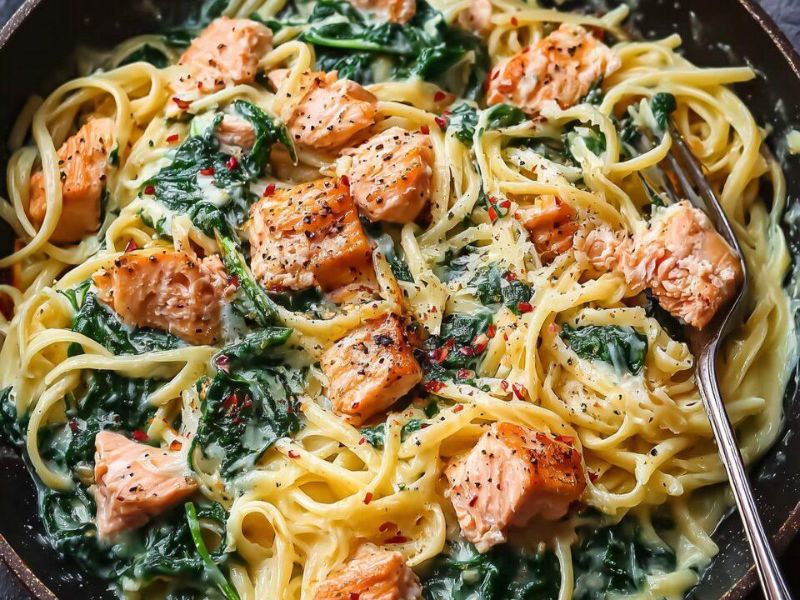
- To begin, cook the pasta according to the package directions. Drain the pasta, but keep a small amount of the cooking water for later.
- Warm the olive oil in a pan, then add the chopped onion.
- Cook until the onion softens, then stir in the garlic and oregano.
- Add the salmon pieces and cook thoroughly, turning them as needed.
- Add the milk and let the mixture heat gently until it starts to simmer.
- Add the spinach and stir until the leaves wilt.
- Reduce the heat and gradually mix in the Parmesan cheese.
- Finally, add the cooked pasta and toss until the sauce coats the noodles evenly.
water. For extra freshness, finish the dish with a little lemon juice.
If the sauce gets too thick, stir in a little of the saved pasta water. Finally, add a squeeze of lemon juice for a fresh, zesty flavor
.
How to Keep Healthy Salmon Pasta Sauce Smooth
Avoid boiling the milk-based sauce vigorously because excessive heat can affect its texture. In addition, add the cheese gradually and stir continuously to help it blend evenly.
You can use lower-fat milk if preferred, although the sauce may be less rich. This approach gives you a creamy texture while allowing you to control the amount of added fat.
3. Healthy Salmon and Broccoli Pasta
Salmon and broccoli make a practical combination for everyday cooking. The salmon provides protein, while broccoli and peas contribute fiber and a variety of nutrients. Furthermore, cooking the vegetables alongside the pasta can reduce preparation time and simplify cleanup.
Ingredients for Salmon Broccoli Pasta
- 250 g whole-wheat pasta
- 300 g salmon fillet
- 2 cups broccoli florets
- ½ cup peas, fresh or frozen
- 2 garlic cloves, chopped
- 1 tablespoon olive oil
- Juice of half a lemon
- 2 tablespoons fresh parsley
- Black pepper to taste
- Salt to taste
Step-by-Step Cooking Method

- First, bring a large pot of water to a boil and cook the pasta according to its package instructions.
- Add the broccoli during the final few minutes of cooking so that it becomes tender without turning mushy.
- Add the peas near the end of the cooking time and allow them to heat through.
- Meanwhile, heat olive oil in a separate skillet and add the garlic.
- Place the salmon in the skillet and cook until fully cooked and easily separated into flakes.
- Drain the pasta and vegetables, reserving a little cooking water.
- Combine the pasta, broccoli, peas, and salmon in the skillet.
- Add lemon juice, parsley, and black pepper, then toss gently.
- Finally, add a splash of cooking water if needed to help the ingredients combine.
Easy Ways to Improve the Recipe
For additional flavor, sprinkle a small amount of Parmesan over the finished dish. Alternatively, add chili flakes if you enjoy a little heat.
You can also replace the peas with chopped zucchini or green beans. Nevertheless, adjust the cooking time according to the vegetables you choose so that each ingredient retains a pleasant texture.
4. Tomato Basil Healthy Salmon Pasta Recipes
Tomato basil salmon pasta is a delicious alternative to creamy sauces. Tomatoes create a naturally tangy base, while garlic and basil provide a fresh, aromatic flavor. As a result, this recipe works well for anyone who enjoys Mediterranean-inspired meals.
Ingredients for Tomato Basil Salmon Pasta
- 250 g whole-wheat spaghetti or penne
- 300 g salmon fillet
- 1 tablespoon olive oil
- 2 garlic cloves, minced
- 2 cups chopped fresh tomatoes or halved cherry tomatoes
- ½ teaspoon dried oregano
- ¼ teaspoon black pepper
- ¼ cup fresh basil leaves
- 2–4 tablespoons pasta water, as needed
- Salt to taste
Cooking Instructions

- Cook the pasta according to the package directions until tender but still slightly firm.
- Meanwhile, heat olive oil in a skillet over medium heat.
- Add the garlic and stir briefly, taking care not to let it burn.
- Add the tomatoes and oregano, then simmer for approximately 8–10 minutes until the tomatoes soften and form a sauce.
- In a separate pan, cook the salmon until it reaches a safe internal temperature.
- Break the cooked salmon into large flakes and add it to the tomato sauce.
- Add the drained pasta and toss gently.
- Stir in a little pasta water if the sauce is too thick.
- Finally, add the fresh basil and black pepper before serving.
Ways to Customize the Tomato Sauce
For more variety, add sliced mushrooms, zucchini, or bell peppers to the tomatoes. You can also use canned tomatoes without added salt when fresh tomatoes are unavailable.
If you prefer a slightly spicy flavor, add a pinch of red pepper flakes. However, taste the sauce before adding extra salt, especially if you plan to include Parmesan cheese.
5. Quick Salmon Pesto Pasta

Salmon pesto pasta is a convenient option for busy evenings because pesto delivers plenty of flavor with minimal preparation. Its combination of basil, oil, and seasonings complements the salmon while helping the sauce coat the pasta.
Ingredients for Salmon Pesto Pasta
- 250 g pasta of your choice
- 300 g salmon fillet
- 2 tablespoons basil pesto
- 1 cup cherry tomatoes, halved
- 1 cup baby spinach
- 1 teaspoon olive oil, if needed
- Black pepper to taste
- Lemon juice to taste
Instructions for Preparing Salmon Pesto Pasta
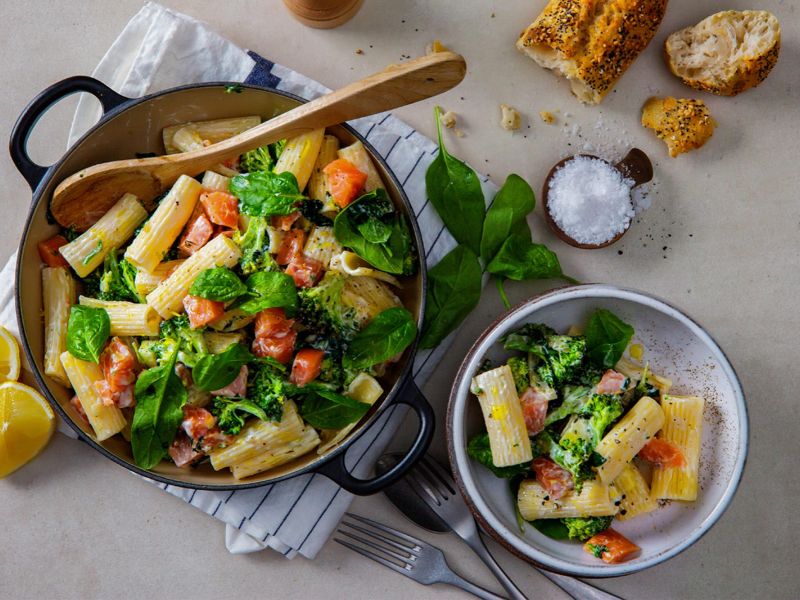
- First, cook the pasta according to the package instructions.
- Reserve a little pasta water before draining.
- Season the salmon with black pepper and cook it in a skillet until thoroughly cooked.
- Add the cherry tomatoes and cook until they begin to soften.
- Remove the skillet from the heat and stir in the pesto.
- Add the baby spinach and allow the residual heat to wilt the leaves.
- Add the cooked pasta and a small splash of pasta water.
- Gently fold the salmon into the mixture, keeping the flakes as intact as possible.
- Finish with a little lemon juice and serve immediately.
How to Use Pesto Wisely
Pesto can contain considerable amounts of oil, cheese, and sodium. Therefore, start with a small quantity, mix thoroughly, and add more only if needed.
You can also prepare a simple homemade pesto using basil, garlic, olive oil, and a small amount of Parmesan. However, adjust the ingredients to your taste and dietary preferences.
How to Make Healthy Salmon Pasta Recipes More Nutritious
A few practical adjustments can help you create more balanced pasta dishes without sacrificing flavor. Rather than removing every rich ingredient, focus on the overall combination of pasta, salmon, vegetables, and sauce.For more protein-rich dinner inspiration, explore our healthy beef dinner recipes for easy, flavorful, and nutritious meal ideas.
Choose Whole-Wheat Pasta
Whole-wheat pasta generally provides more fiber than refined white pasta. Fiber supports normal digestion and can contribute to fullness as part of a balanced diet.
Nevertheless, regular pasta can still fit into nutritious meals. Choose the variety you enjoy and pay attention to the overall ingredients and serving size.
Include a Variety of Vegetables
Spinach, broccoli, peas, tomatoes, mushrooms, and zucchini all work well with salmon. Moreover, using different vegetables throughout the week can introduce a wider range of nutrients and textures.
For example, add spinach to creamy pasta, broccoli to a lemon-based dish, or tomatoes to a fresh basil sauce.For families looking for more meal inspiration, check out our healthy recipes for picky eaters for simple ideas that can make everyday meals more appealing
Use Creamy Ingredients in Moderation
You can create a creamy texture with milk and Parmesan instead of using large quantities of heavy cream. Alternatively, plain yogurt may be stirred into a sauce after removing it from the heat to reduce the risk of separation.
However, different ingredients produce different results, so adjust the consistency gradually.
Control Sauce and Portion Sizes
A large amount of sauce is not necessary for flavorful pasta. Instead, combine a reasonable portion of pasta with salmon, vegetables, and enough sauce to coat the ingredients.
This approach can help keep the meal satisfying without making the sauce the main component.
Choose Appropriate Cooking Methods
Baking, steaming, and pan-cooking with a modest amount of oil are useful options for preparing salmon. In addition, avoid cooking the fish for longer than necessary, as this can make its texture dry.
Always cook fish to the recommended safe internal temperature.
Fresh Salmon vs. Canned Salmon for Pasta
Both fresh and canned salmon can work well in homemade pasta dishes. The best choice depends on your budget, preparation time, and preferred texture.
| Feature | Fresh Salmon | Canned Salmon |
| Preparation | Requires cooking | Usually ready to use |
| Texture | Tender, flaky fillet | Softer, easily broken into pieces |
| Convenience | Requires refrigeration and preparation | Convenient for quick meals |
| Flavor | Mild, rich seafood flavor | Varies by product |
| Best Use | Baked, pan-cooked, or creamy pasta | Quick pesto, tomato, or lemon pasta |
If you use canned salmon, drain it as directed and check the label for sodium content. Also, inspect the contents for bones or skin if you prefer a smoother texture.
Ingredient Substitutions for Salmon Pasta
You can adapt these recipes according to what is available in your kitchen. The following substitutions offer flexibility without requiring an entirely different cooking method.
| Original Ingredient | Possible Substitute | Helpful Tip |
| Whole-wheat pasta | Regular pasta | Follow the package cooking time |
| Fresh spinach | Frozen spinach | Thaw and drain excess liquid |
| Fresh tomatoes | No-salt-added canned tomatoes | Simmer to develop the sauce |
| Fresh salmon | Canned salmon | Add gently near the end |
| Milk | Suitable unsweetened dairy-free milk | Choose one designed for cooking |
| Fresh lemon | Bottled lemon juice | Add gradually and taste |
| Broccoli | Green beans or zucchini | Adjust cooking time for texture |
When making substitutions, remember that the flavor, thickness, and nutritional content may change. Therefore, taste the dish before serving and adjust the seasonings accordingly.
Common Mistakes to Avoid When Cooking Salmon Pasta
Even simple salmon pasta recipes can lose their texture or flavor when small cooking details are overlooked. Fortunately, these problems are easy to prevent.
Overcooking the Salmon
Salmon may become dry when cooked for too long. To avoid this problem, check the thickest part with a food thermometer and remove the fish from the heat once it reaches the recommended temperature.
Adding Too Much Sauce
Excess sauce can overpower the salmon and make the pasta feel heavy. Instead, add the sauce gradually and use reserved pasta water to help it coat the noodles evenly.
Forgetting to Season Gradually
Seasoning the salmon before cooking helps build flavor. Afterwards, taste the sauce before adding more salt, especially when using pesto, cheese, or prepared ingredients that already contain sodium.
Cooking Vegetables for Too Long
Different vegetables require different cooking times. For instance, broccoli needs more time than spinach, so add each ingredient at the appropriate stage to avoid a mushy texture.
Mixing Pesto or Cheese Over Excessive Heat
High heat can affect the texture of pesto and cheese-based sauces. Therefore, remove the skillet from the heat before adding pesto, and keep cheese sauces at a gentle temperature.
Meal Prep and Storage Tips for Salmon Pasta

Planning ahead can make salmon pasta easier to prepare during busy weekdays. However, proper storage is essential because cooked seafood is perishable.
- Prepare ingredients ahead: Wash vegetables, chop garlic, and measure seasonings before cooking.
- Store leftovers promptly: Refrigerate cooked salmon pasta within two hours of preparation in shallow, airtight containers.
- Follow storage guidance: Properly refrigerated leftovers can generally be kept for three to four days at 40°F (4°C) or below.
- Reheat thoroughly: Heat leftovers to 165°F (74°C), stirring when appropriate to ensure even heating.
- Refresh the sauce: Add a small amount of water or milk during reheating if the pasta has become dry.
For best quality, avoid repeatedly reheating the entire batch. Instead, warm only the portion you plan to eat.
If cooked salmon pasta has remained at room temperature for more than two hours, discard it rather than relying on its smell or appearance to determine whether it is safe.
Conclusion
Healthy salmon pasta recipes provide an easy way to enjoy flavorful seafood meals at home. From fresh lemon garlic pasta to creamy spinach dishes, vegetable-rich broccoli combinations, tomato basil sauces, and quick pesto meals, there are options for a variety of tastes and schedules.
Furthermore, choosing whole-wheat pasta, including colorful vegetables, and using sauces in sensible amounts can help create satisfying meals. Proper cooking and storage also make it easier to enjoy salmon pasta safely.
Start with the recipe that best matches your preferences, then experiment with different herbs, vegetables, and sauces. With simple ingredients and a little preparation, healthy salmon pasta can become a delicious addition to your regular dinner routine.
Recipe note: Cooking times are estimates. Always cook salmon to 145°F (63°C) and follow safe food-storage practices.
Frequently Asked Questions About Healthy Salmon Pasta Recipes
1. Are healthy salmon pasta recipes suitable for dinner?
Yes. Salmon provides protein and omega-3 fats, while pasta supplies carbohydrates. Adding vegetables can make the meal more varied and balanced.
2. Can I make salmon pasta without cream?
Yes. Lemon and olive oil, tomato sauce, or a modest amount of milk can create flavorful alternatives to heavy cream.
3. Is whole-wheat pasta a good choice for salmon recipes?
Whole-wheat pasta generally contains more fiber than refined pasta, although both varieties can fit into a balanced eating pattern.
4. Can I use canned salmon instead of fresh salmon?
Absolutely. Canned salmon is a convenient alternative for quick pasta dishes, especially when combined with pesto, tomatoes, lemon, or spinach.
5. How long does salmon pasta take to cook?
Most simple salmon pasta recipes take approximately 20–35 minutes, depending on the pasta, cooking method, and thickness of the salmon.