
Cream of chicken is a popular ingredient in soups, casseroles, sauces, and quick family meals. But is cream of chicken healthy? The answer depends on the ingredients, serving size, sodium content, saturated fat, and how often you eat it. Some versions can provide protein and convenience, while others may contain considerable amounts of sodium, saturated fat, and calories. Understanding its nutrition profile can help you make informed choices while still enjoying your favorite comfort foods.
What Is Cream of Chicken?
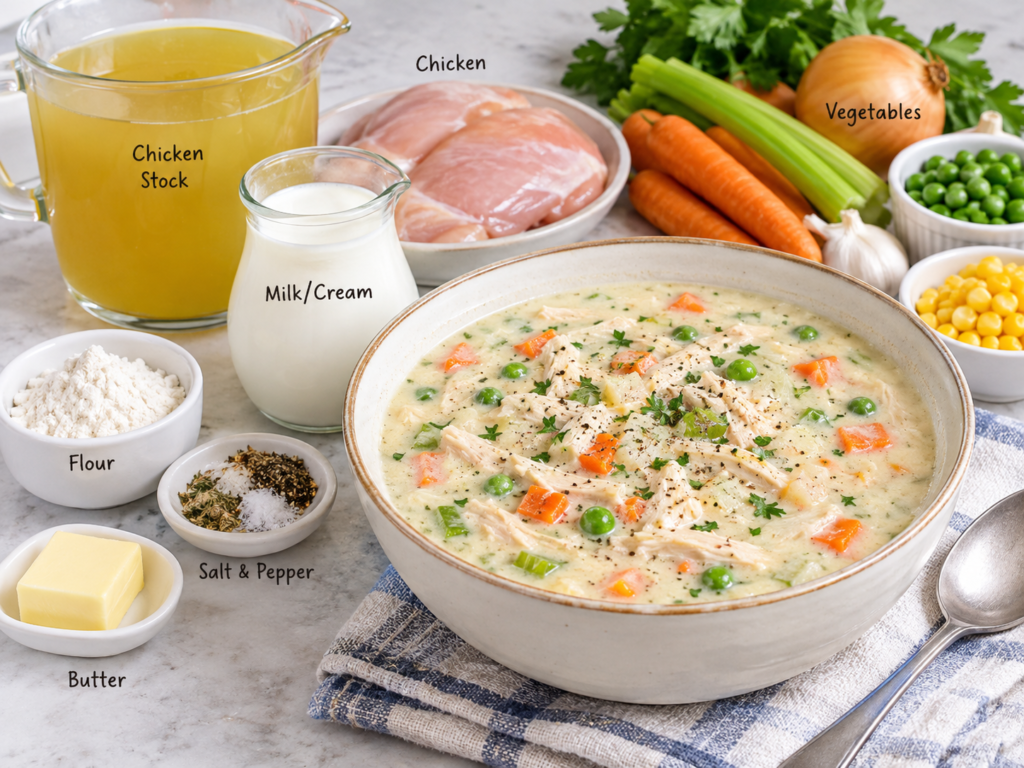
Cream of chicken is a creamy soup or cooking ingredient traditionally made with chicken stock, chicken, milk or cream, and a thickening ingredient such as flour or starch. Commercial varieties are commonly sold in cans and are designed to be used as a base for other dishes.
Unlike a traditional bowl of chicken soup, cream of chicken is often concentrated. As a result, it may be used in smaller quantities and mixed with water, milk, broth, vegetables, or other ingredients before serving.
There are also homemade versions that allow you to control the ingredients. For example, you can prepare a lighter version with low-sodium chicken broth, lean chicken, milk, vegetables, and a small amount of flour or cornstarch.
Because recipes vary significantly, the nutritional value of one cream of chicken product may be very different from another.
Is Cream of Chicken Healthy?

The short answer is: it can be part of a healthy diet, but it is not automatically a healthy food.
The overall nutritional quality depends on the specific product and how it is prepared. A homemade version containing lean chicken, vegetables, low-sodium broth, and moderate amounts of dairy can be a nutritious choice.
On the other hand, some packaged varieties can be high in sodium and may contain significant amounts of saturated fat. Eating large portions or using cream frequently in meals can make it easier to consume more sodium, calories, and fat than intended.
Therefore, instead of labeling cream of chicken as simply “healthy” or “unhealthy,” it is more useful to consider the entire recipe and your overall eating pattern.
If you are wondering whether cream of chicken is bad for you, the answer depends largely on the specific product and portion size. A lower-sodium version used with vegetables and lean protein can fit into a balanced meal. However, regularly eating large portions of a high-sodium or high-fat variety may make it harder to keep your overall diet balanced.
Cream of Chicken Nutrition at a Glance
The exact nutrition facts differ between brands and homemade recipes. However, the following table shows the main nutrients you should consider when evaluating this type of food.
| Nutrient/Factor | What to Consider |
|---|---|
| Calories | Vary by brand, recipe, and serving size |
| Protein | Depends on how much actual chicken the product contains |
| Sodium | Can be high in some canned varieties |
| Saturated Fat | May be higher in products made with cream or butter |
| Carbohydrates | Often come from flour, starch, milk, or other ingredients |
| Fiber | Usually low unless vegetables, beans, or whole grains are added |
This is why reading the nutrition label is important rather than assuming every product has the same nutritional profile.
Potential Benefits of Cream of Chicken

Although cream of chicken can have drawbacks, it can also provide useful nutritional and practical benefits depending on the recipe.
1. It Can Provide Protein
Chicken is naturally a source of high-quality protein. If a cream of chicken recipe contains a meaningful amount of actual chicken, it can contribute to your daily protein intake.
Protein is important for maintaining muscle, supporting normal body functions, and helping you feel satisfied after meals.
However, not every packaged cream of chicken product contains a large amount of chicken. Consequently, check the ingredient list and nutrition facts if protein is one of your priorities.
2. It Can Make Meals More Satisfying
Creamy dishes can be filling because they often combine protein, carbohydrates, and fat. When cream of chicken is used with vegetables and lean protein, it can become part of a balanced meal.
For instance, combining a moderate amount of creamy chicken sauce with broccoli, carrots, peas, and grilled chicken can create a more nutrient-dense dish than using the soup alone. If you are interested in another nutritious chicken soup option, chicken tortilla soup can also be a satisfying choice when prepared with healthy ingredients.
3. Some Versions Provide Calcium
Milk and other dairy ingredients may contribute calcium. Calcium is important for maintaining strong bones and teeth and also supports normal muscle and nerve function.
Nevertheless, the amount varies from product to product. Therefore, check the nutrition label instead of assuming that every cream-based chicken soup is a significant source of calcium.
4. It Is Convenient
Convenience is another advantage. Canned cream of chicken can save preparation time, particularly when you are making a quick casserole, soup, or sauce.
Convenience foods can fit into a balanced diet when they are combined with nutritious ingredients and consumed in reasonable portions.
Potential Drawbacks to Consider
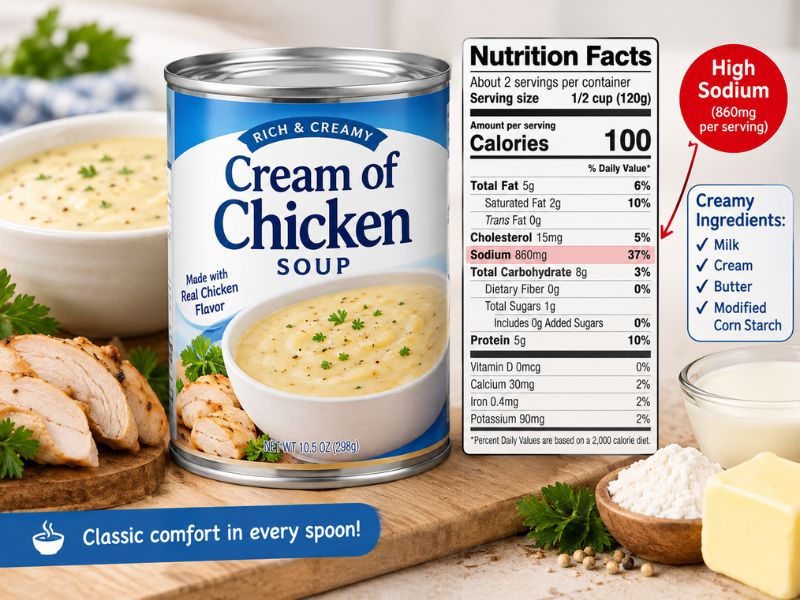
While there are benefits, several factors can make certain cream of chicken products less suitable for frequent consumption.
1. It May Be High in Sodium
Sodium is one of the biggest concerns with many canned soups and prepared sauces. Manufacturers may use salt to improve flavor and extend shelf life.
Eating too much sodium regularly can make it difficult to maintain a balanced diet, particularly for people who have been advised to limit sodium.
Fortunately, low-sodium and reduced-sodium options are often available. Comparing labels can make a substantial difference.
2. Some Varieties Contain More Saturated Fat
Cream, butter, and other dairy ingredients can increase saturated fat. Saturated fat is not something you necessarily need to eliminate completely, but keeping intake moderate is generally recommended as part of a heart-conscious eating pattern.
A lighter recipe can use low-fat milk or another suitable alternative instead of relying heavily on cream and butter.
3. It Can Add Extra Calories
Cream of chicken is concentrated, meaning a relatively small amount can contribute calories to a recipe. This is especially important when the dish also contains cheese, butter, heavy cream, or large amounts of oil.
For this reason, portion size matters.
4. Some Packaged Products Contain Additional Ingredients
Commercial products may include thickeners, preservatives, flavoring ingredients, or stabilizers. These ingredients are not automatically harmful, but people who prefer simple foods may want to choose products with shorter and easier-to-understand ingredient lists.
5. It May Not Provide Much Fiber
Traditional cream of chicken is generally not a major source of dietary fiber. Fiber supports digestive health and contributes to fullness.
Adding vegetables, beans, lentils, or whole grains to the meal can help improve its overall nutritional value.
How to Make Cream of Chicken Healthier

If you enjoy creamy chicken dishes, you do not necessarily have to remove them from your diet. Instead, make a few practical changes.
Choose a Low-Sodium Version
Start by comparing nutrition labels and selecting a low-sodium or reduced-sodium product when available.
You can also dilute a concentrated soup with unsalted or low-sodium broth. This can help reduce the amount of sodium per serving while maintaining flavor.
Add Plenty of Vegetables
Vegetables can transform a creamy chicken dish into a more balanced meal.
Good choices include:
Broccoli
Carrots
Celery
Peas
Mushrooms
Spinach
These ingredients add vitamins, minerals, antioxidants, and fiber while increasing the volume of the meal.
Use Lean Chicken
If you are preparing a chicken casserole or soup, choose skinless chicken breast or another lean cut.
Lean chicken can increase protein without adding as much saturated fat as fattier cuts or chicken prepared with the skin.
Control the Amount of Creamy Ingredients
More cream does not necessarily mean a better meal. Using a moderate amount can provide the desired texture and flavor without making the entire dish excessively rich.
Milk, plain yogurt, or a homemade broth-based sauce may sometimes be used to create a lighter consistency.
Be Careful With Cheese and Toppings
Cheese, crackers, tortilla chips, bacon, and buttery toppings can significantly increase calories, saturated fat, and sodium.
Instead, use smaller portions and add herbs, garlic, black pepper, paprika, lemon juice, or fresh vegetables for additional flavor.
Is Homemade Cream of Chicken Healthier?
In many cases, homemade cream of chicken can be a healthier alternative because you have greater control over the ingredients.
For example, a homemade version can include:
Herbs and spices
Low-sodium chicken broth
Skinless chicken
Low-fat milk
Fresh vegetables
A small amount of flour or cornstarch
This approach makes it easier to reduce sodium and control the amount of fat.
A Simple Healthier Cream of Chicken Idea

A basic homemade version can be prepared without making the recipe complicated.
Start by sautéing onions and garlic in a small amount of cooking oil. Then add diced skinless chicken and cook it thoroughly. Pour in low-sodium chicken broth and add vegetables such as carrots, celery, peas, or mushrooms.
For a creamy texture, add low-fat milk and use a small amount of flour or cornstarch as a thickener. Finally, season with black pepper, garlic powder, parsley, thyme, or other herbs.
The result can be a comforting meal with protein and vegetables while allowing you to control the amount of salt and fat. For another nutritious homemade option, try this healthy chicken soup recipe.
Is Cream of Chicken Healthy for Weight Loss?
Cream of chicken is not specifically a weight-loss food, but it can be included in a calorie-conscious eating plan.
Weight management depends largely on your overall calorie intake, food choices, physical activity, and long-term eating habits. A creamy soup can fit into that pattern when the portion is appropriate and the complete meal is balanced.
For a lighter meal, combine a moderate amount of cream of chicken with lean protein and plenty of vegetables. Avoid automatically adding large quantities of cheese, butter, cream, or high-calorie toppings.
Most importantly, focus on the entire meal rather than one ingredient.
Is Cream of Chicken Good for a High-Protein Diet?
It can contribute some protein, especially when it contains chicken, but it should not necessarily be considered a high-protein food by itself.
If your goal is to increase protein intake, pair it with foods such as:
Grilled chicken breast
Beans or lentils
Greek yogurt
Eggs
Cottage cheese
Adding a clear protein source to the meal can make it more filling and nutritionally balanced.
Is Cream of Chicken Healthy to Eat Every Day?
Eating cream of chicken occasionally can fit comfortably into many balanced diets. However, eating a highly processed, high-sodium variety every day may not be the best approach.
Instead, vary your meals and include a wide range of whole and minimally processed foods. Vegetables, fruits, whole grains, legumes, lean proteins, nuts, seeds, and suitable dairy products can all contribute important nutrients.
If you particularly enjoy cream of chicken, consider alternating between homemade versions and lower-sodium packaged options.
What Should You Look for on the Nutrition Label?
When buying packaged cream of chicken, do not focus on calories alone. Several parts of the label deserve attention.
Sodium
Compare different brands and choose an option with less sodium when possible.
Saturated Fat
Look for products that are moderate or lower in saturated fat, particularly if the rest of your diet already contains several sources of saturated fat.
Protein
Check how much protein the product provides per serving. If it contains very little chicken, you may need to add another protein source.
Ingredient List
Look for recognizable ingredients and compare products rather than choosing based only on packaging claims.
Serving Size
Always check the serving size. A package may contain multiple servings, and consuming the entire container can provide substantially more calories and sodium than the label’s single-serving information suggests.
Healthier Alternatives to Cream of Chicken
If you want the creamy texture without relying heavily on canned soup, several alternatives can work well.
| Alternative | Why It May Help |
|---|---|
| Low-sodium chicken broth | Adds chicken flavor with less creaminess and potentially less fat |
| Greek yogurt | Adds creaminess and protein |
| Low-fat milk | Creates a lighter creamy texture |
| Blended vegetables | Adds fiber, vitamins, and natural thickness |
| Homemade chicken sauce | Gives you more control over sodium and fat |
The best option depends on the recipe and the texture you want.
Who Should Be More Careful With Cream of Chicken?
Some people may need to pay closer attention to the sodium, fat, or ingredient content of packaged cream of chicken.
For example, people who have been advised by a healthcare professional to follow a low-sodium or heart-conscious eating pattern may want to compare products carefully.
Likewise, anyone with a food allergy or intolerance should check the ingredient label for milk, wheat, soy, or other ingredients that may be present.
If you have a specific medical condition or dietary restriction, follow individualized advice from your doctor or registered dietitian.
Final Verdict: Is Cream of Chicken Healthy?

So, is cream of chicken healthy? The most accurate answer is that it depends on the product, portion size, sodium content, and the ingredients used in the complete meal.
Cream of chicken can provide protein, convenience, and a creamy texture, but some packaged varieties may also contain high amounts of sodium, saturated fat, and calories. Therefore, it is best to treat it as one ingredient within a balanced meal rather than relying on it as a primary source of nutrition.
For a healthier approach, choose a lower-sodium product, read the nutrition label, use reasonable portions, and add plenty of vegetables and lean chicken. Alternatively, prepare a homemade version so you can control the ingredients.
Ultimately, healthy eating does not require giving up every convenient or comforting food. Instead, making smarter ingredient choices and maintaining balance can allow cream of chicken to have a place in a nutritious eating pattern.
Conclusion
Cream of chicken can be enjoyed as part of a balanced diet when used in moderation. Choosing nutritious ingredients and pairing it with vegetables, lean protein, or whole grains can make the overall meal more satisfying and balanced. By making mindful choices about portions and ingredients, you can enjoy cream of chicken while supporting a healthy eating pattern.
Frequently Asked Questions
1. Is cream of chicken healthy?
It can be healthy in moderation, especially when made with nutritious ingredients and less sodium.
2. Is cream of chicken soup high in sodium?
Many canned varieties are high in sodium, so choosing a low-sodium option is preferable.
3. Is cream of chicken good for weight loss?
It can fit into a weight-loss diet when consumed in a controlled portion with vegetables and lean protein.
4. Is homemade cream of chicken healthier?
Homemade versions can be healthier because you can control the amount of salt, fat, and other ingredients.
5. Can I eat cream of chicken every day?
It is better to vary your meals and choose lower-sodium options rather than relying on cream of chicken every day.